


-
January 26, 2026
-
5 min read
Optimising Animal Infusion: What to look for when choosing an infusion pump
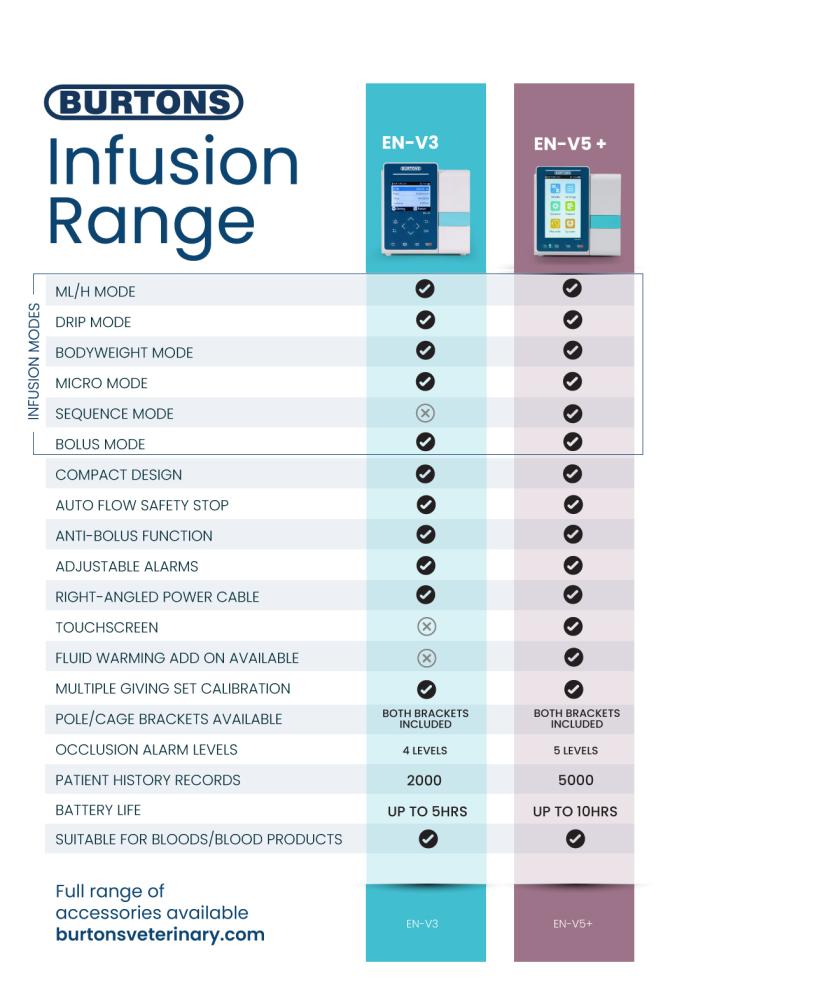
In the fast-paced world of veterinary care, precision and safety are essential when delivering fluid therapy, whether it's during surgery, post-operative recovery, or critical care. An effective veterinary infusion pump, used alongside high-quality giving sets, can enhance patient outcomes, reduce risks, and improve workflow for your team. But what features truly matter in day-to-day use, and what practical benefits do they bring to your practice? In this blog, we explore the most impactful features of fluid pumps and giving sets, and the significant role they play in animal infusion.
Infusion modes & functions: Every mode serves a specific purpose and has its benefits
Ml/ h mode
The standard in most veterinary practices, this mode allows you to program the total volume to be infused over a specific period of time or set a precise infusion rate. It's ideal for accurate dosing and time-sensitive fluid delivery, offering high precision and flexibility. Simply input any two of the three parameters — volume, rate, or time — and the pump will automatically calculate the third. Benefits: High dosing accuracy and useful for complex protocols.
Sequence mode
This advanced mode allows you to program multiple infusion rates in a timed sequence — for example, delivering a higher volume initially, then automatically reducing the rate after a set period. You can schedule up to five different mL/h rates in one sequence. Benefits: Great for dehydrated patients that need an initial high rate, and especially useful for stepped fluid therapy or staged drug administration. It also helps reduce the need for manual adjustments by staff.
Drip mode
This is a standard fluid delivery setting for standard giving sets, normally delivering 20 drops/ml (dependent on giving set). It will calculate the time based on how many drops per minute you want to deliver. Benefits: Efficient for routine procedures, compatible with standard IV sets, and delivers fluids in larger drops at a faster rate.
Body weight mode
The pump will calculate the infusion rate based on the patient's weight and the prescribed dose. Used for critical care patients and constant rate infusions. Benefits: Reduces human error, tailors’ fluid therapy to the patients’ individual needs, useful for fragile or very small patients.
Micro mode
Ideal for small or delicate patients, Micro Mode is designed for highly precise, small-volume fluid delivery. It is a built-in safety feature that allows you to set a maximum rate limit, ensuring the pump cannot deliver more than the specified amount. This added control helps minimise the risk of over-infusion, making it especially useful in sensitive or critical cases. Benefits: Highly accurate dosing reduces the risk of fluid overload, ideal for small volumes.
Bolus mode
Bolus Mode allows you to deliver a larger volume of fluid over a short period of time — ideal for rapid fluid resuscitation or medication delivery. This can be done manually by pressing a button to start and stop the bolus, or automatically by programming a specific volume and duration (e.g., 1000ml over 10 minutes). Benefits: It offers flexibility and control in critical situations where quick, fluid administration is needed.
Purge air function
This feature allows you to flush the giving set before connecting it to the patient, helping to remove air from the line quickly and safely. It’s typically used during setup to prime the line and prepare the system. The flushed volume is not counted in the total fluid delivery, so it doesn’t affect the programmed dose.
Infusion pump key features
Auto free-flow safety stop
This prevents inadvertent excess infusion by automatically closing the tube once the door is opened.
Adjustable KVO (keep vein open)
A low flow rate setting is used to maintain IV access after the main infusion has finished or paused, preventing the vein or catheter from becoming blocked by blood or backflow and ensuring that the line remains usable if further fluids are needed.
Anti-bolus function
A safety feature designed to reduce the bolus that may occur upon the release of occlusion (blockage).
Occlusion detection
Prevents overpressure and ensures patient safety
Adjustable alarms
This feature allows you to modify the limits that set off alarms, as well as adjust the volume.
Suitable for bloods and blood products
The EN-V3 and EN-V5 infusion pumps have been manufacturer-tested and are suitable for the administration of whole blood, plasma, and other blood products. However, gravity feeding remains the gold standard, as pump use may carry a risk of premature haemolysis. Clinicians should apply their own judgement for each patient and follow appropriate guidance. Care should be taken to use correctly calibrated giving sets, recognising that some residual risk may remain.
Right-angled power cable
After customer feedback, we now ensure that all of our Infusion pumps come with a right-angled power cable as standard. This is to lessen the amount of cable that is accessible to the patient. Allowing you to cage mount your infusion pump without chewable cables sticking out into the cage.
Night mode
This is different on each unique pump. The feature is designed to reduce disturbances to recovering patients during the night, dimming visual alarms and screens, and reducing alarming noises.
Suitable for crystalloids, colloids and bloods
Some infusion pumps can be harmful to blood cells and can cause haemolysis. This all comes down to the type of force that is used, some can cause the blood cells to be crushed in the movement. Some peristaltic pumps now work in a way where gentle waves control the force, enabling blood cells to pass through unharmed.
Add on fluid warmers
Some pumps allow you to add on an optional fluid warmer. These add-on leads warm the fluid as it moves through the infusion line and helps to keep your patient’s temperature at a comfortable level.
Multiple giving set calibration storage
This allows you to store multiple giving set brands and types within one pump, meaning you no longer need separate calibrated pumps for different applications. This can reduce equipment costs and improve procedure efficiency.
Pole/cage mount brackets available
All Burtons Pumps come with an infusion pole mount included as standard, with an optional cage mount available for each type of pump.
When it comes to delivering consistent and safe patient infusion, choosing the right veterinary infusion pump makes a measurable difference. From preventing accidental over-infusion to protecting blood cell integrity, each feature supports better patient care and smoother clinical operations.
By investing in technology designed specifically for veterinary needs, such as customisable alarms, cage-mountable designs, and gentle fluid delivery, your team can work more efficiently while maintaining the highest standards of care. Understanding these features empowers you to make informed equipment decisions that benefit your patients, your staff, and your bottom line.

Share on Facebook

Share on X

Share on Pinterest

Share on LinkedIn
Related Products

500 Giving Sets + Free Burtons EN-V3 Infusion Pump
Regular Price
£1,544.57
Now
Discounted Price
£730.80
£609.00

Burtons EN-V3 Infusion Pump
£485.99
£404.99

Burtons EN-V5+ Infusion Pump Kit
From £607.79 £506.49

Popular Posts


